
Are your kitchen knives feeling dull and frustrating to use? A sharp knife makes all the difference, turning meal prep from a chore into a smooth, enjoyable task.
If you’ve got a Kitchen IQ Knife Sharpener but aren’t sure how to get the best results, you’re in the right place. This simple tool can quickly restore your knives to razor-sharp perfection—but only if you use it correctly. Keep reading, and you’ll learn easy, step-by-step tips to sharpen your knives safely and effectively.
Soon, you’ll wonder how you ever managed without it!
Credit: www.walmart.com
Setup And Safety
Setting up your Kitchen IQ Knife Sharpener safely ensures effective sharpening and protects you from injury. Proper setup helps the sharpener stay steady and your hands stay safe. Follow these simple steps to prepare your sharpener for use.
Positioning The Sharpener
Place the sharpener on a clean, flat surface. The V-grip base hooks securely onto the edge of your countertop. Make sure it is aligned so the sharpener does not slip during use. Avoid placing it on uneven or slippery surfaces.
Ensuring Stability
Check the sharpener’s grip before starting. Press down gently to confirm it is stable. If your countertop edge is too thick or thin, adjust the sharpener position. A steady base prevents accidents and helps sharpen blades evenly.
Safety Precautions
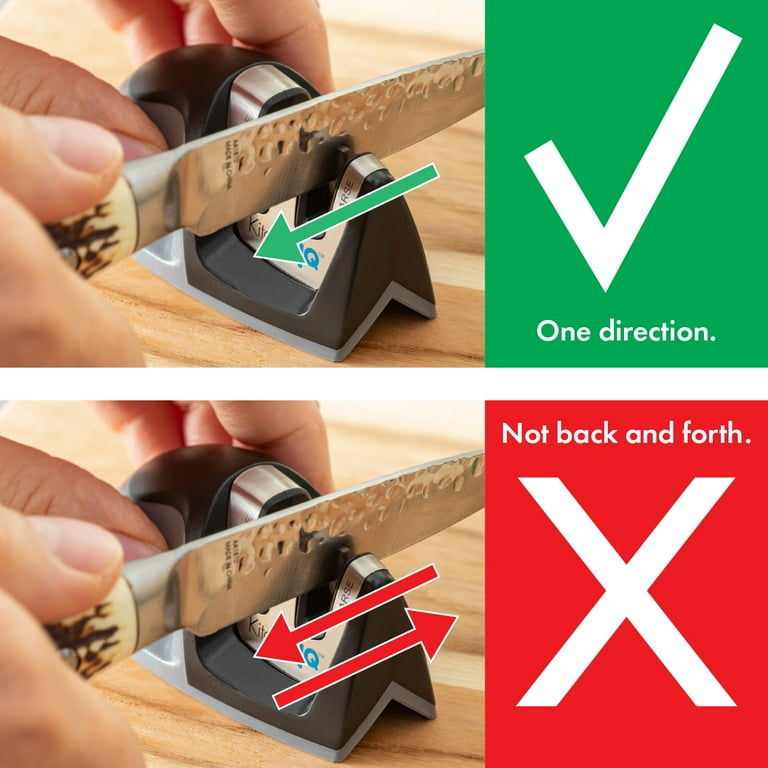
Hold the knife handle firmly while sharpening. Always pull the blade through the sharpener in one direction. Do not push the blade back and forth. Keep your fingers clear of the sharpening slots. Never use excessive force to avoid blade damage or injury.
Choosing The Right Slot
Choosing the right slot on your Kitchen IQ knife sharpener is key to effective sharpening. Each slot serves a different purpose and matches specific blade conditions. Using the correct slot extends the life of your knives and ensures a sharp, safe edge.
Coarse Slot For Dull Blades
Use the coarse slot for knives that have lost their edge. This slot removes more metal to reshape the blade quickly. It works best on very dull or damaged knives. Pull the blade through the slot gently several times. Avoid over-sharpening, which can wear out the blade.
Fine Slot For Regular Sharpening
The fine slot is for regular maintenance of your knives. It refines the edge after using the coarse slot or sharpens blades that only need a touch-up. This slot smooths the blade and improves cutting performance. Use light pressure and pull the knife through slowly to keep the edge sharp.
Ceramic Slot For Serrated Knives
Serrated knives need special care. Use the ceramic slot designed for these blades. It sharpens without damaging the serrations or teeth. Pull the serrated knife through the slot carefully. This slot helps keep the knife effective for slicing bread and other foods with tough skins.
Sharpening Steps
Sharpening your knife with the Kitchen IQ Knife Sharpener is simple and effective. Follow each step carefully to get a sharp edge every time. These steps ensure safety and best results.
Pulling The Knife Correctly
Hold the knife handle firmly. Insert the blade into the sharpener’s slot. Pull the knife straight through from heel to tip. Do not use a back-and-forth motion. Keep the blade vertical and steady. This method sharpens evenly and safely.
Number Of Passes Needed
Start with three to five pulls through the coarse slot. Check the sharpness after each pass. Use the fine slot for two to three pulls to polish the edge. Avoid over-sharpening to protect the blade. The right number of passes keeps your knife sharp and durable.
Applying Proper Pressure
Apply light to moderate pressure while pulling the blade. Too much pressure can damage the blade or sharpener. Let the sharpener do the work with smooth, steady pulls. Keep your grip firm but relaxed for control. Proper pressure helps achieve a clean, sharp edge.
Post-sharpening Care
After sharpening your knife with the Kitchen IQ knife sharpener, proper care helps keep the blade sharp and safe. Post-sharpening care protects the knife’s edge and extends its life. It also ensures your knife stays clean and ready for use.
Cleaning The Knife
Rinse the knife with warm water immediately after sharpening. Use a mild dish soap to remove any metal particles left on the blade. Avoid harsh detergents that can damage the metal. Gently scrub the blade with a soft sponge or cloth. Do not use abrasive materials, as they can dull the edge.
Careful cleaning prevents rust and keeps the knife in good condition. Thorough rinsing removes soap residue, which may affect taste or food safety.
Drying And Storage Tips
Dry the knife fully with a clean towel after washing. Water left on the blade can cause rust or spots. Store knives in a dry place, such as a knife block or magnetic strip. Avoid tossing knives in a drawer, which can dull the blade and cause accidents.
Keep the knife away from moisture and humidity. Proper storage maintains sharpness and protects the edge from damage.
Tips For Best Results
Getting the best results from your Kitchen IQ Knife Sharpener takes some care and attention. Small details can make a big difference in how sharp your knives become. Follow these tips to keep your blades in top condition and sharpen safely.
Each step in the sharpening process matters. Focus on the knife angle, avoid common errors, and know the right time to sharpen. These tips will help you sharpen efficiently and protect your knives.
Maintaining Knife Angle
Keep the knife vertical when sharpening. Hold it straight, not tilted. This helps the sharpener work evenly on the blade. A steady angle avoids uneven sharpening and damage. Use gentle pressure to guide the knife through the sharpener. Too much force can ruin the edge.
Avoiding Common Mistakes
Do not push and pull the knife back and forth. Pull the blade through once in a smooth motion. Avoid sideways or twisting movements. These can scratch or dull the blade. Clean the knife after sharpening to remove metal bits. Use only the correct slot for your knife type. Serrated knives need the fine ceramic slot only.
When To Resharpen
Check your knives often for dullness. A knife that slips or crushes food needs sharpening. If you must press hard to cut, it is time to sharpen. Avoid waiting too long. Frequent light sharpening works better than rare heavy sharpening. Resharpen before the blade feels too dull to save its life.

Credit: www.youtube.com
Troubleshooting
Troubleshooting your Kitchen IQ knife sharpener ensures it works well for a long time. Problems can happen, but simple fixes often solve them. Knowing what to check saves time and keeps your knives sharp and safe.
Blade Not Getting Sharp
Check if you are using the right slot for your knife type. The coarse slot sharpens dull blades, while the fine slot polishes edges.
Pull the blade through slowly and steadily, keeping it straight. Applying too much pressure can reduce effectiveness.
Make sure the blade is clean before sharpening. Dirt or residue can block sharpening action.
Damage Prevention
Never use the sharpener on broken or chipped blades. This can worsen damage to both knife and sharpener.
Use light to moderate pressure only. Pressing hard may wear down the sharpening rods faster.
Keep the sharpener stable on the counter by using the V-grip edge. Movement can cause uneven sharpening or accidents.
Sharpener Maintenance
Clean the sharpener regularly by wiping it with a damp cloth. Avoid soaking it in water to protect internal parts.
Check for metal shavings or debris inside the sharpening slots and remove them carefully.
Store the sharpener in a dry place to prevent rust or damage to the sharpening surfaces.

Credit: www.amazon.com
Frequently Asked Questions
How Do You Use A Kitchen Iq Knife Sharpener?
Place the sharpener’s V-grip on a countertop edge for stability. Pull the knife blade through the coarse slot 5-20 times. Use the fine slot for serrated knives. Keep the blade vertical and apply light pressure. Clean the knife after sharpening to remove metal filings.
How To Use A Knife Sharpener Step By Step?
Place the sharpener securely on a flat surface. Hold the knife vertically and pull the blade through the coarse slot 5-20 times. Then, use the fine slot for finishing. Apply light pressure and keep the blade straight. Clean the knife after sharpening to remove filings.
What Dulls A Knife The Fastest?
Cutting on hard surfaces like glass, stone, or ceramic dulls knives fastest. Using improper sharpening tools also wears blades quickly.
Do You Push Or Pull A Knife Through A Sharpener?
Pull the knife blade through the sharpener in one smooth motion. Avoid pushing or using a back-and-forth motion. Keep the knife straight and apply light pressure. This technique sharpens the blade effectively and prevents damage to both the knife and sharpener.
Conclusion
Using the Kitchen IQ knife sharpener keeps your blades sharp and safe. Place it firmly on a flat surface for stability. Pull your knife through the slots in one smooth motion. Use the coarse slot for dull blades and fine slot for regular sharpening.
Remember to keep your knife straight and apply gentle pressure. Clean your knife after sharpening to remove metal dust. Sharpening often helps your knives cut better and last longer. Simple steps make kitchen tasks easier and safer every day.